- Published on
From Writing Code to Orchestrating AI: The Delegate-Review-Own Model Every Engineering Lead Needs Now
- Authors

- Name
- Qudrat Ullah
There is a paradox sitting at the center of engineering in 2026.
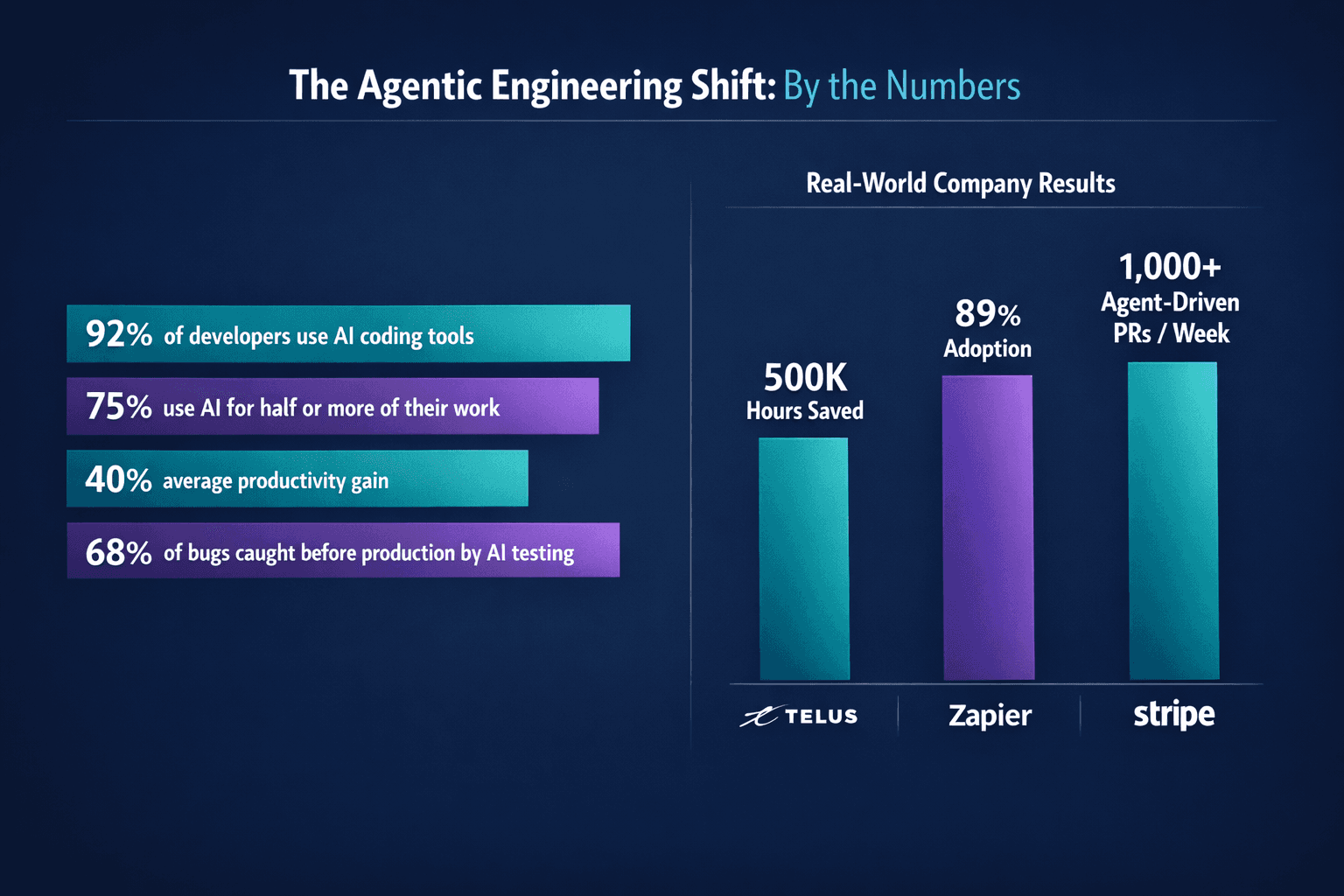
80% of developers are now using AI coding agents in their daily workflows. Productivity gains of 35 to 45% have been documented across organizations that have leaned in. AI-powered testing frameworks are catching 68% of bugs before they even reach production. By every metric, adoption is a runaway success.
And yet trust in AI accuracy has dropped from 40% to 29% year-over-year.
That is not a contradiction. That is the market maturing.
The developers who experienced initial euphoria, shipped AI-generated code without enough scrutiny, and then watched subtle bugs slip through into production: they are the ones driving that trust number down. I have been there. And working through that experience forced me to completely rethink how I structure my relationship with AI coding tools.
What I landed on is something teams are converging on across the industry. The Delegate-Review-Own model.
What "Agentic" Actually Means Now
Twelve months ago, "AI-assisted development" mostly meant smart autocomplete. A tool that finished your function signature, suggested a variable name, maybe drafted a docstring.
That era is over.
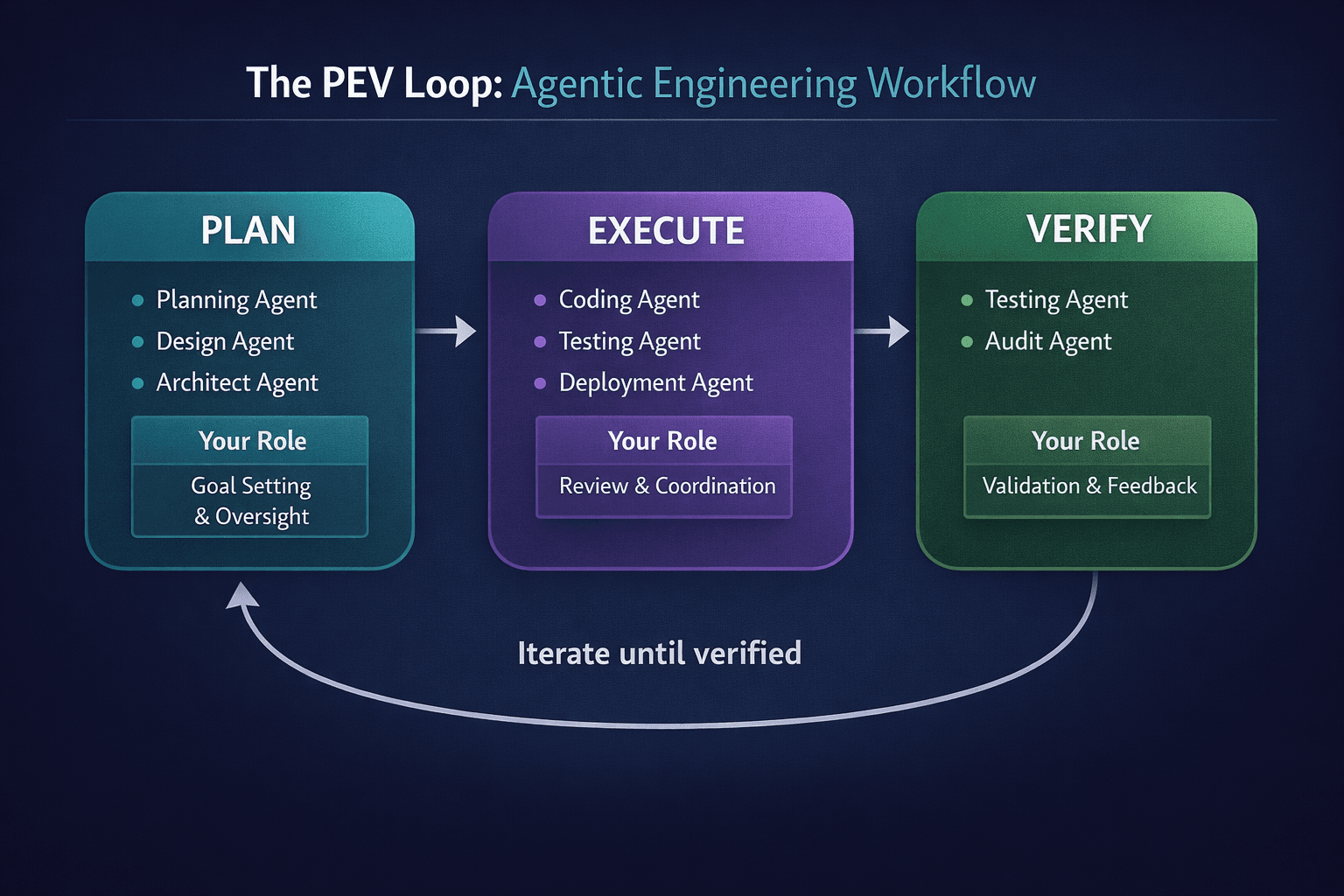
In 2026, the leading AI coding tools operate as genuine agents. They do not respond to a single prompt and stop. They run through execution loops: breaking down a task, scaffolding a solution, writing tests, running those tests, reading the failure output, revising the implementation, and iterating until the criteria are met. Tools like Claude Code, Cursor with background agents, and JetBrains Central (launched in March 2026 as an "open system for agentic software development") can now handle hours of work autonomously before ever surfacing a result for your review.
Gartner projects that 40% of enterprise applications will embed AI agents by the end of 2026. That number is not about chatbots in a sidebar. That is agents taking actions inside production systems, writing code, running queries, submitting pull requests.
The question for every engineering lead is no longer "should we use AI tools?" It is "how do we operate in a world where agents are doing significant chunks of the work?"
The Delegate-Review-Own Model
The teams getting this right in 2026 have stopped thinking about AI tools as productivity boosters and started thinking about them as a new tier of the engineering team. Here is the model I have settled on:
┌─────────────────────────────────────────────────────────────┐
│                   DELEGATE - REVIEW - OWN                   │
├───────────────┬─────────────────────────┬───────────────────┤
│   DELEGATE    │        REVIEW           │       OWN         │
│               │                         │                   │
│ Agent handles │  Engineer validates     │ Human accountable │
│ first-pass    │  correctness, risk,     │ for architecture, │
│ execution:    │  alignment, edge cases  │ trade-offs,       │
│               │                         │ outcomes          │
│ - Scaffolding │  Ask: "Would I have     │                   │
│ - Tests       │  written it this way?"  │ Non-delegatable:  │
│ - Boilerplate │  "What did the agent    │ - System design   │
│ - Docs        │  not consider?"         │ - Risk calls      │
│ - First impl  │  "Is there hidden debt  │ - Team judgment   │
│               │  here?"                 │ - Stakeholder     │
│               │                         │  communication    │
└───────────────┴─────────────────────────┴───────────────────┘
Delegate means being intentional about what you hand off. Good candidates: first-draft implementations of well-scoped tickets, test case generation, documentation, boilerplate for new services, refactoring passes for isolated modules. Bad candidates: anything touching security-critical paths without a tight spec, cross-system integration design, or anything where requirements are genuinely ambiguous.
Review is where the model breaks down for most teams. Engineers trained to "code fast and trust the AI" skip review or treat it like a rubber stamp. That is how the 29% trust number gets generated. Effective review in an agentic workflow is different from reviewing a colleague's PR. You are not just checking "does this work?" You are asking: "What assumptions did the agent make that I never specified?" and "What failure modes exist that the agent was not asked to consider?" This requires reading agent output with more skepticism, not less, precisely because the code often looks clean and confident.
Own means the engineer, not the agent, is accountable for what ships. This sounds obvious, but the cultural pressure to externalize blame onto "the AI wrote it" is real on some teams. The role shift from creator to orchestrator does not change who carries responsibility. If anything, that responsibility sharpens: you are now accountable for the quality of your instructions, the rigor of your review, and the integrity of your final approval.
What This Means for How You Lead Your Team
I have made three concrete changes to how I run my team since we adopted this model:
1. Redefine "done" in your definition of ready. Before any agent-assisted ticket ships, the engineer on point must be able to explain why specific design choices were made, not just that the tests pass. We now explicitly ask this in code review. It surfaces quickly who is reviewing versus rubber-stamping.
2. Separate agent velocity from engineer throughput. Your sprint velocity will look wildly different when agents are doing first-pass work. That is not a reflection of team performance. I stopped using raw output volume as a signal of individual contribution and shifted to measuring decision quality, architecture coherence, and review depth.
3. Build agent guardrails into your workflow, not just your tools. We define clear "agent lanes" per project. The agent can operate freely inside those lanes. Outside them, it surfaces a proposal and waits for human decision. This is not slowing the agent down. It is structuring the agent's autonomy so review effort is concentrated where risk is highest.
The Skill That Actually Matters Now
Everyone is talking about "prompt engineering" as the new developer skill. I think that framing is already outdated.
The skill that matters in 2026 is orchestration: how you design the interaction protocols between specialized agents, how you specify constraints and guardrails upfront, how you sequence multi-agent workflows, and how you build review checkpoints that catch what the agent missed without creating so much friction that the productivity gains evaporate.
That is an engineering judgment skill. It requires deep domain knowledge, system intuition, and the ability to anticipate second-order failures. Junior engineers struggle with it not because they lack technical ability but because they do not yet have the accumulated context to know what questions to ask.
This, more than anything, is what makes experienced engineering leads more valuable in 2026 than they were in 2023, not less.
The agents are not replacing judgment. They are raising the floor on execution speed, which means the ceiling for leverage now belongs to the people who bring the clearest thinking to what gets built and why.
The engineers who are thriving right now are the ones who treated the first wave of AI tools as an opportunity to sharpen their review instincts, design cleaner specs, and think harder about system architecture. The ones struggling are the ones who tried to compete with the agents at their own game: raw output speed.